Lolita Coquette: The Adorable Font for Enchanting Designs
When a project calls for a specific kind of sweetness—something that’s equal parts playful, intricate, and undeniably charming—finding the right typeface can feel like a quest. You need more than just a script font or a display font; you need a character. This is where Lolita Coquette enters the conversation. It’s a creative font that doesn’t just spell out words; it dresses them up in lace and pink ruffles, capturing the essence of coquette and lolita aesthetics in every curve and swash. For designers and creators, it’s less a tool and more a collaborator in bringing a very specific, delightful vision to life.
Understanding the Personality and Visual Charm
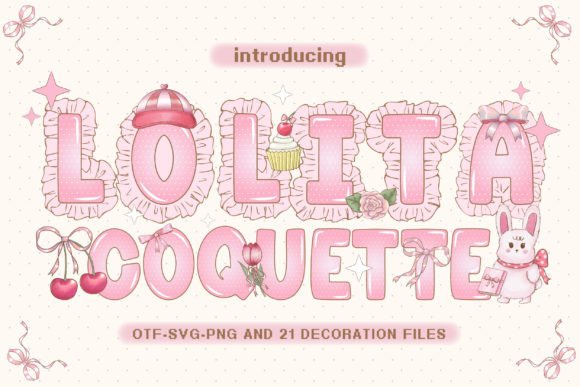
At its core, Lolita Coquette is a premium font designed for impact, not for setting long blocks of body copy. Think of it as the centerpiece of your typographic hierarchy. Its visual style is unmistakable: letterforms are adorned with delicate, lace-like details and soft, rounded terminals that evoke the frills and bows of its namesake fashion. The personality is one of whimsical femininity, youthful innocence, and curated cuteness. It’s a typeface that speaks directly to audiences who appreciate a touch of fantasy and elaborate ornamentation in their visual media.
The font comes in two distinct styles, offering practical versatility. One style likely presents the core decorative letterforms, while the other might offer an alternate set of characters or a complementary weight. This allows you to create subtle variations or pair the Lolita Coquette elements without overwhelming a design. Crucially, the package includes a collection of cute clip art, which are essentially design assets that match the font’s aesthetic. These aren’t afterthoughts; they are integral components that let you build cohesive, enchanting scenes around your typography, perfect for enhancing that handmade, custom feel.
Where This Creative Font Truly Shines
The real-world applications for a font like Lolita Coquette are specific but powerful. Its strength lies in projects where brand identity or personal expression leans into the sweet, whimsical, or fantastical. For small business owners in the handmade or boutique space, it can become a cornerstone of your logo design and packaging design. Imagine this font on the packaging for artisanal soaps, bakery boxes, or stationery—it instantly communicates a product that is crafted with care and charm.
For content creators, bloggers, and social media managers, it’s a standout choice for social media graphics, particularly Instagram story templates, Pinterest pins, or YouTube thumbnails for channels focused on DIY, beauty, fashion, or lifestyle. The font’s inherent style helps grab attention and sets a precise mood before a word is fully read. In editorial design, it could be used sparingly but effectively for magazine headlines, pull quotes, or chapter titles in a themed publication, adding a layer of visual interest that a standard serif font or sans serif font couldn’t provide.
For the crafter and hobbyist, its utility is straightforward. It is explicitly marketed for custom DIY craft projects, custom names for decals, sublimations on mugs or shirts, and poster creation. The compatibility note is key here: the black version works with Cricut Design Space and other cutting machines, making it accessible for vinyl and paper crafts. The color version, which likely incorporates those lace and pink details directly into the glyph, is designed for digital design programs like Photoshop or Illustrator, opening up even more possibilities for printed and digital projects where a full-color, intricate design is desired.
Practical Guidance for Using Lolita Coquette
Integrating a highly stylized font like Lolita Coquette into your workflow requires a thoughtful approach to maintain professionalism and readability. First, evaluate the project fit. Is your audience and subject matter aligned with this aesthetic? Using it for a corporate law firm’s website would be a mismatch, but for a children’s boutique or a fantasy-themed event invitation, it’s perfect. Its role is to enhance audience engagement through emotional resonance, not to serve as a neutral information carrier.
When considering font pairing, balance is everything. Lolita Coquette demands a quiet partner. Pair it with a clean, geometric sans serif font or a simple, readable serif font for any supporting text. The contrast will allow the decorative font to command attention without creating visual chaos. For example, use Lolita Coquette for a headline and a font like Open Sans or Lora for the paragraph text below it. This creates a clear visual hierarchy and ensures your message remains accessible.
Always test the font in context. View it at the size you intend to use. While it may be legible at poster size, intricate details might blur at smaller scales. Check the included styles and clip art—do they offer the variations you need? Finally, understand the licensing. As a commercial font, ensure its use covers your project, whether it’s for personal crafts or commercial products for sale. The distinction between the black and color versions is critical for your production process, especially if you’re using cutting machines. Taking the time to match the font file to your software and hardware will save significant frustration later.
In the end, Lolita Coquette is a specialized tool in the modern typography landscape. It’s not for every project, but for the right one, it provides a visual shorthand for a entire aesthetic. It allows creators to quickly infuse their work with a specific personality, transforming a simple design into something memorable and emotionally resonant. By understanding its strengths and applying it with intention, you can leverage this unique design asset to craft truly enchanting work that stands out in a crowded visual world.